• Skip to primary navigation
  • Skip to main content
  • Skip to primary sidebar
  • Staff
  • About Us
  • Contact Us

Myers Park Hoofprint

The Myers Park High School Newspaper

  • Arts & Entertainment
  • Campus News
  • Editorials
  • Features
  • Local/National
  • Sports
  • World News
  • Editor’s Notes
  • Podcasts

Dimitri Katsanos

America’s Next Frontier

February 12, 2025 By Dimitri Katsanos

America has never shied away from its desire to expand its territory as our nation has continued to evolve. The country has constantly moved in pursuit of new lands throughout history, with the principle of Manifest Destiny and the purchase of Alaska as some of the many examples of American expansionism in the past 250 years. The most recent chapter of this phenomenon appears to have just begun with the election of President Donald Trump, who has stated his desire for a slew of different places to become part of the United States. Some of his goals have been more serious than others, with the pursuit of Greenland being seen as the most realistic. The President has also suggested that Canada become the 51st State and that the US should regain control of the Panama Canal, empowering his base while frightening American allies. Regardless of the final outcome, American expansionism has returned for the next 4 years.

The new movement started shortly after President Trump was elected, with a meeting with former Canadian Prime Minister Justin Trudeau as one of the first serious indications of the President’s desire for the Canadian neighbor to become a part of the Red, White, and Blue. Over dinner at the President’s Mar A Lago Resort, Trump suggested to Trudeau that if Canada could not deal with his proposed tariffs, the nation should just become the 51st State. The comments spread like wildfire, with both sides presenting them as more of a fantasy than a real possibility. The comments did help demonstrate the new foreign policy approach of the Trump Administration, which has threatened and imposed tariffs on US allies like Canada and Colombia in order to exert pressure on countries to come in line with US policies.

Tariff pressure has not been the only thing that Trump has threatened. The President has increasingly used rhetoric in order to extract his political goals as well. He has engaged in a public feud with the government of Panama, demanding that the US regain control of the Canal because of perceived Chinese interference in its operation. Furthermore, the President has used executive action in order to exert his will, signing an executive order to rename the Gulf of Mexico to the Gulf of America, adding another layer to his war of words and political posturing.

Trump’s biggest focus has been on acquiring the country of Greenland, sending a group of family members and political allies to the nation in order to explore the possibility of a sale or other maneuver to acquire the country. He has also lobbied the Danish government with demands to acquire Greenland, which is part of Denmark. The Danish government has resisted most of the attempts of the President and has become increasingly wary of the President’s efforts. Notably, Greenland’s government has moved towards independence under the leadership of Prime Minister Mute Egede, and Denmark has affirmed the nation’s right to do so. Even if it were to gain independence, Greenland would more likely wish to remain independent rather than move to being a part of another nation. Greenland becoming part of the US will likely remain an interesting discussion in global affairs for the foreseeable future.

Supporters of the President champion these maneuvers as part of the “America First” nationalist policies of the administration, which all work to project American influence and strengthen the country through strategic deals and initiatives. Opponents argue that the public feuds help create rifts between the US and other countries, weakening the US position on the global stage as well as with critical allies. Ultimately, these moves show the nation’s future as it explores a continued expansion of the nation that started as 13 colonies nearly 250 years ago.
Filed Under: World News

Editor’s Note

February 12, 2025 By Dimitri Katsanos

As the change of spring occurs in the coming months, there is often a tone of reflection in my own life, looking back to make myself better as I move towards the newest chapter of my life as the year progresses. One of the biggest changes lately has been taking over the responsibilities of being one of the Co-Editor-In-Chiefs of The Hoofprint. This will be my first paper as Co-Editor-In-Chief, along with Will, and the transition has been great because of the immense support of both Reid and Maryanne who have helped guide us along the way during the first few weeks of our new positions. One of our first responsibilities has been to interview our newest applicants for next year and after talking to everyone it is easy to see that the future for our staff is bright! However, as we chart the path of the future I like to look back at my own experience to guide me. 

When I first picked up a copy of The Hoofprint, I never envisioned the idea of being on staff, let alone becoming the Co-Editor in Chief. Yet, the paper has shaped my high school experience in many different ways. I was inspired to work as a sports broadcaster for the school after reading Maryanne’s article highlighting the work of her brother Brendan and Hoofprint alum Harry Crowther and the need for a new broadcaster. For a freshman in high school, it was a new experience that built off of my passion for sports and was one that forced me to grow as an individual. The journey from reading that article to the most recent game has shaped me significantly, teaching me how to be ambitious, communicate and navigate new challenges that were unfamiliar to me. The opportunity that I found because of The Hoofprint inspired me to apply to the staff, wanting to give back to someone else in my situation and help them become inspired about the special MP community that surrounds them.

The journey that article led me on has been another source of growth as I became part of the staff and worked to contribute to my community through my writing. Furthermore, it has taught me how to take risks and work collaboratively with others and understand that everything isn’t going to go your way. The biggest impact, however, has been how The Hoofprint has reshaped the value of community in my life and made me evaluate the impact of community on our lives. Through writing for The Hoofprint I have witnessed the multitude of communities within the larger Myers Park community and the impact that they have had on students and teachers. On a personal level, these communities are at the forefront of our goals as journalists at Myers Park and highlight the importance of telling the stories of these communities so that our readers can be better informed and engaged with our school.

Moving forward, I look back to these experiences as a valuable lesson of our focus, to provide news that is compelling, accurate, and important for people to know. Journalism is the basis of any community, and The Hoofprint is no exception. Our mission is to be the source that helps students become engaged with their community by providing them with the knowledge and information they need. As the next chapter of our paper begins, it is important to build off of the work of those who came before us and continue the tradition of coverage centered around community as we look to evolve our paper overtime.

Filed Under: Editor's Notes

Jerry Springer Documentary

February 12, 2025 By Dimitri Katsanos

Photo contributed by Creative Commons

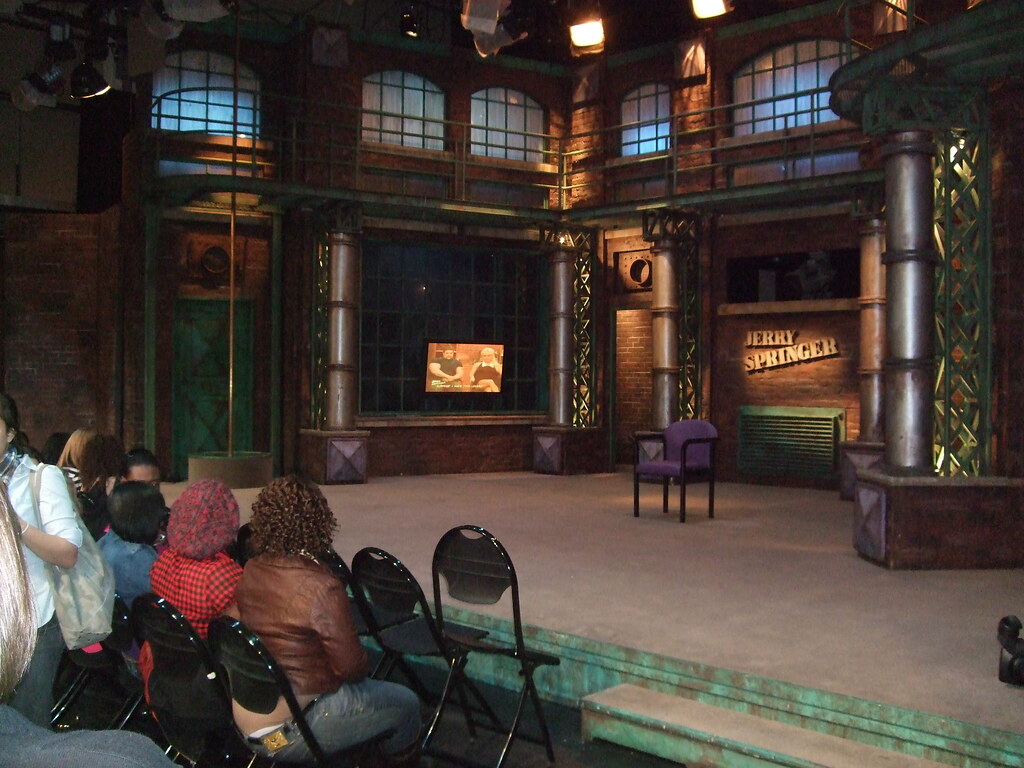
Jerry Springer was a man of many talents. He was a politician, broadcaster, lawyer, and actor but he was best known for his role as the host of the Jerry Springer Show which dominated television during its 27 season run on national television from 1991 till 2018. The show was known for its rambunctious nature which often pushed the limits of what was considered appropriate for television. The show was a cultural phenomenon in the US, often unseating The Oprah Winfrey Show as the most-watched program on television. Recently, Netflix sat down with the crew and producers behind the show in their documentary Jerry Springer: Fights, Camera, Action as they detail the story behind the show’s success and its impact and legacy on American culture.
The documentary drives into the origins of Springer, who had political aspirations before turning to the talk show business. At first, the show was more discussion-oriented, with subpar ratings until the arrival of Executive Producer Richard Dominick who brought his tabloid experience to the show. His focus was on finding outlandish things that would make the show standout and draw the attention of TV viewers as they looked through the channels. The biggest example of this was the episode “Klanfrontation” in which KKK members fought Irv Rubin of the Jewish Defense League. The shock value of these style of episodes boosted the show’s ratings and continued a pattern of episodes that devolved into fights and other attention grabbing topics. One episode even featured a man who had married a horse. The new style was met with widespread criticism of the show, which many felt was severely inappropriate, but catapulted its ratings to new highs because of the shock value.
Behind the scenes, this new focus on fights and crazy stories required the producers of the show to commit some questionable behaviors to have the guests perform on stage. Oftentimes that would mean that guests were given the star treatment with limos and drink tickets before getting wound up by a staff member before the show. Interviews from the documentary highlight the mental toll of job on the production team and add on to the criticism of the show. The show was even sued at one point over its role in the murder of Nancy Campbell, who was killed by her ex-husband. Both had appeared on the show, with the murder occurring on the day that the episode first ran. The lawsuit was ultimately unsuccessful but ignited another wave of criticism over the behavior of the show towards its guests and how they were portrayed on television. Regardless, the show remained a cultural icon in the eyes of many. For Jerry, he described his show as a “circus” and as a place where individuals were able to “demonstrate outrageousness”. This belief was more than just words for Jerry, who was a fierce advocate for free speech on his show and often had on individuals whom he or society would not agree with.
The show’s reputation of sensationalism and free speech will live on but will constantly be debated if it was for the better. Oftentimes in the modern day, we see that the mainstream elements of society will run with a headline that is false or misleading in order to draw attention, without serious attention towards accuracy. Furthermore, the platform that Springer advocated for is important in a functioning society but can be detrimental when his show glorifies violence as a part of the discourse. Many point to these factors as having a negative impact on society because of the platform they provided for sensationalism to become mainstream.

Filed Under: Local/National

Name, Image, Lunacy

May 29, 2024 By Dimitri Katsanos

In the 118-year history of the NCAA, there have been many challenges and changes to college sports, yet none compare to the difficulties that Name, Image, and Likeness (NIL) deals pose to the college sports landscape. NIL deals were first approved in 2021, allowing players to earn sponsorships and money from their celebrity as college athletes. This new system has dramatically changed collegiate sports that have historically profited from the performance of their amateur players. Proponents have heralded the movement as a way for athletes to earn their fair share of the huge sums of money that universities have profited from, expanding athletes’ rights. However, even with its benefits to players, many have criticized the system as having degraded the quality of college sports and being too wide-reaching. As colleges and universities continue to adapt to the environment of NIL, it has been clear that the movement has significantly hurt the quality of college sports by expanding the disparities that already exist between rich and poor schools.

One of the biggest criticisms of NIL is how it has turned college sports into a minor sports league. Schools use NIL and the transfer portal as the equivalent of NFL free agency, which creates a constant round-about of players between teams and increases the prevalence of older players transferring into major programs. This is especially true in college basketball because of the conditions facing athletes. Some have the opportunity to go professional and earn a respectable salary if they are a top twenty pick. Others have to decide between going pro and fighting for a rooster or staying put, allowing them to make a similar amount of money while having greater opportunities in the future, with many choosing the latter. This reality isn’t inherently bad, but it has shaken up the game in two significant ways. First, as college players stay in school, the average age of college players increases, making the sport look more like the NBA’s defunct G-League Ignite. It also makes it so that players are incentivized to move around through the transfer portal for money and opportunities, which makes the sport have less recognizable stars and a shifting moral compass. Former Alabama Coach Nick Saban recently told ESPN that part of the decision for his retirement was that 70 to 80 percent of his roster was focused on demanding more money or transferring right after the conclusion of the 2023 season. This direction isn’t necessarily a good one for college sports and could create many more problems as NIL expands.

Another significant issue with NIL is the disparities that it creates between schools as gaps in resources and legal abilities cause some schools to have competitive disadvantages. There are many examples of this currently, with some schools like Arkansas using a five-million-dollar NIL fund to attract players, which many schools cannot afford to compete with. Additionally, some schools are handicapped by the various laws that exist, since there is no single set of laws governing NIL on a national scale. This has made the NIL era almost like the Wild West, with few restrictions and minimal regulators, allowing some programs to abuse the system in the new environment that is emerging. Without proper regulations, schools may be put at a near-permanent disadvantage because of NIL.

NIL has significantly harmed the structure of college sports, making what was once an amateur game into a money-oriented business. This shift harms the spirit of what college sports were meant to be, degrading the experience of everyone involved. While athletes earning their fair share is important, we need to consider the implications of the current system that is developing in college sports. As the sport shifts from personal achievement to financial achievement, it threatens to redesign the sport in an unfriendly way. Name, Image, and Likeness is here to stay, but the NCAA must focus on preserving the integrity of the shining moments of the sport.

Filed Under: Editorials, Sports

Thank You, Coach

May 29, 2024 By Dimitri Katsanos

It’s the end of an era. Men’s Basketball Coach Scott Taylor is leaving Myers Park and taking a new position at Ambassador Christian School. Taylor is one of the most successful coaches in the history of Myers Park, piecing together one of the greatest runs of any team in Myers Park history. Coach Taylor created and led many teams, filled to the brim with outstanding talent, to multiple deep playoff runs and the schools first ever 4A State Championship. He is also an outstanding part of our school community, appreciated by everyone for his hard work and dedication to developing the program. His efforts led to the team consistently being ranked as one of the best public schools in the country and elevated the program’s attention significantly on a national scale. Coach Taylor’s impact will be felt and remembered for years to come because of his hard work and dedication.

Coach Taylor had a record win percentage of 70% at Myers Park going 145-63 over his eight years at MPHS. He was also 16-6 in the playoffs, winning the state championship once and gathering four elite eight appearances. In his tenure, he had seven straight winning seasons each with a playoff appearance. Taylor led the Mustangs to two SoMeck 4A conference titles and won the conference tournament twice His teams were often some of the best in the state, if not in the country with the team having two top twenty-five finishes in the MaxPreps national rankings. The team also competed and won multiple tournaments during his career, most recently winning the John Wall Invitational for the first time this past winter.

While Coach Taylor was successful in terms of team performance, he also was an excellent developer of talent. His teams were constantly successful, with him coaching many outstanding players. Over the course of his career, he coached 12 College players with five of them going to play in Division 1. He coached many top prospects including Sir Mohammed, Bishop Boswell, Elijah Strong, and Sadiq White. Coach Taylor also coached Duwe Farris and Drake Maye who both went on to play at North Carolina in Basketball and Football respectively. Maye was recently drafted by the New England Patriots. Even though many of these great players never got to play together, they were all unified by Coach Taylor’s culture of #FamilyHood, with players like Maye and Farris sending messages to the team from college as a way to help encourage and support them in their playoff runs.

Coach Taylor will become the Head Coach and Dean of Students at Ambassador Christian Academy, which is a private school that will be opening its doors for the first time this fall. The team is focused on playing a competitive regional schedule with multiple tournaments already scheduled for the team with more to be announced. Coach Taylor will look to continue to provide college-level development in collaboration with the Joe Gibbs Human Performance Institute for cutting-edge sports performance training. The team also looks to become a premiere destination for the development of college coaches. Assistant Coach Nick Jones will also be going to Ambassador to coach under Taylor.

Coach Taylor will be missed next year here at the Park as he leaves behind his legacy of success. He was a staple of the Men’s Basketball Program for eight years and had an expansive era of success for the Mustangs, guiding us to our first State Championship in 2023. Coach Taylor was one of the greatest to do it at Myers Park and will be missed greatly for all that he has done for our school and program. His legacy will always be about how he did so much for this school and how he was the first to win our school a state title. We wish Coach Taylor the best of luck and congratulations for all of his hard work and accomplishments.

Filed Under: Features

Winter Sports Recap

March 28, 2024 By Dimitri Katsanos

Photo contributed by Dimitri Katsanos

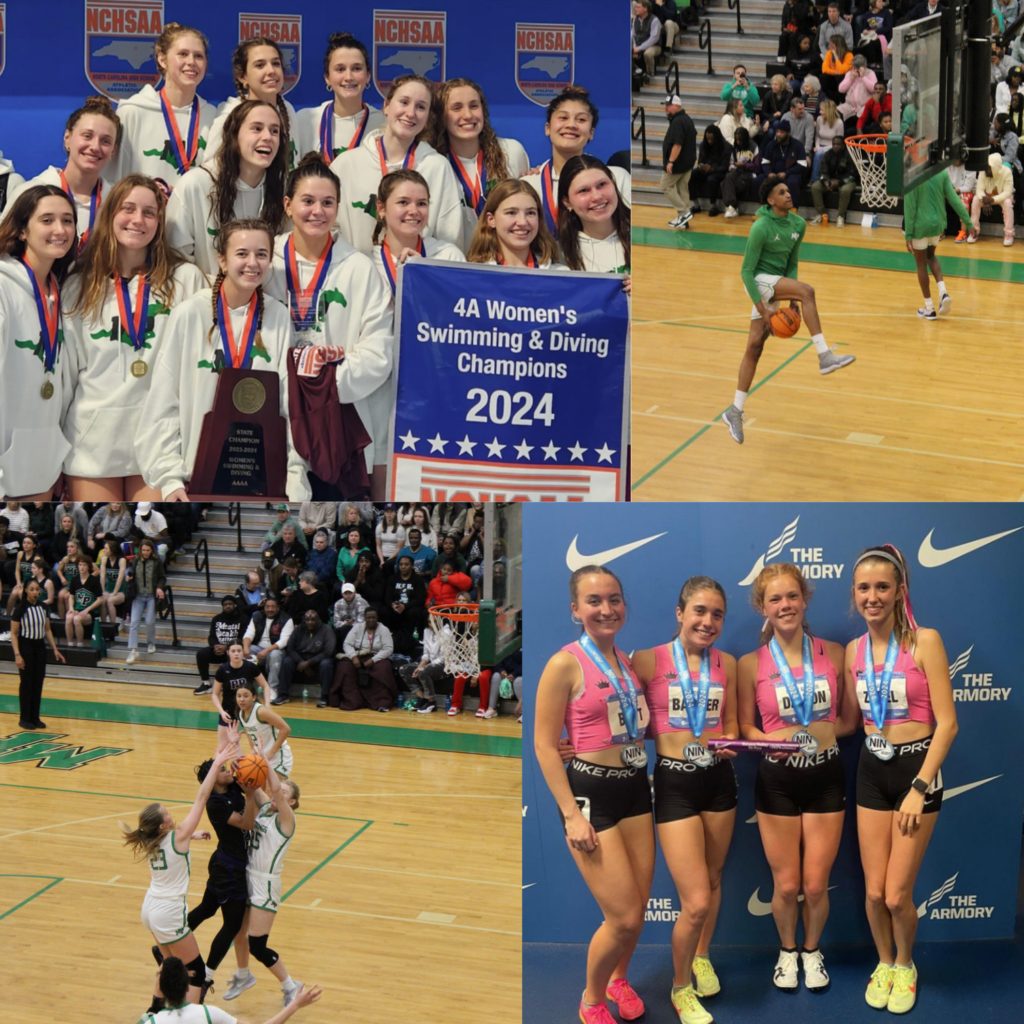
After an impressive fall sports season, the Mustangs backed it up with a jaw-dropping winter season. Multiple sports made the State playoffs, led by the Women’s swim team, who won the state championship, and the Men’s and Women’s Basketball teams who both made it to the 4th round of the State Playoffs. Additionally, Mary Bonner Dalton helped lead the women’s track and field team to a 10th-place finish at States.

The Myers Park Seastangs Swim and Dive team had an excellent season under first-year head coach Ben Sharrer. The win by the Women’s team was the third consecutive State Title for the program. The Men’s swim team also had a solid, 6th-place finish. The Dive team also had an outstanding performance led by Sophomore Nate Robinson who won 4th place overall. Seastang Kayman Neal also received the NCHSAA Sportsmanship Award at States.

The Men’s Basketball team had a dominant season and was nationally ranked, being as high as the number 3 team in the country. They lost to North Meck in the 4th round of the State playoffs, but went undefeated in conference play and won the conference tournament, finishing the season with a 27-3 record and were the highest seed in the 4A West. The team won their first-ever John Wall Holiday Invitational Championship and won both of their games at the City of Jasper Holiday Classic. Also, the players were not short of individual accolades, with Seniors Sir Mohammed and Bishop Boswell, accumulating over 1000 points. Junior Sadiq White also accomplished the feat this season, achieving it in just 3 years. White’s dominant play also earned him the honors of SoMeck Conference Player of the Year. He made 1st team all district along with Mohammed and Boswell, who both received the honor for the second year in a row.

The Women’s Basketball team had an equally impressive season, also going 27-3, earning the 4th seed in the 4A West division of the Conference. The team made it to the 4th round of the playoffs before losing to Watauga, who was the number one seed. The team went undefeated in conference play during the regular season and made it to the championship game of the conference tournament, narrowly losing 53-51 to Ardrey Kell. The team had many high-performing players, led by Senior Jerin Truesdale, who won her second consecutive SoMeck 4A Conference Player of the Year and received 2nd team all-district honors. She also scored her 1000th point and gathered her 500th rebound this year. On top of that, Freshman Amani Barner and Junior Chayla McDaniel were both selected for the SoMeck All-Conference team. Coach Barbra Nelson was named the SoMeck 4A Women’s Coach of the Year for the team’s outstanding season.

The Myers Park Indoor Track also had an excellent performance this year with Senior Mary Bonner Dalton leading the way. At States, she placed 1st in the 3200 Meter Race and 2nd in the 1600 Meter. In the Shot Put competition, Solomon Young finished 5th, and Mariama Hunt placed  6th in the Triple Jump. The women’s team had a standout performance, finishing 10th at the State Championship.

The impressive winter season will go a long way for the Mustangs as we compete for the Wells Fargo Cup in the 4A classification and for the Conference Cup. Both awards are given to the top overall performing school in their respective classification and conference. Points are earned based on the performance of each of the school’s eligible teams throughout the year. The top-ranked team in the State will receive a Silver Cup and Banner. The top team in each conference will receive a Silver Cup as well. After the winter season, the Mustangs are in. Congratulations to all of our athletes and coaching staff on a tremendous winter season.

Filed Under: Campus News, Sports

The Future of High School Sports

March 28, 2024 By Dimitri Katsanos

Photo contributed by NCHSAA

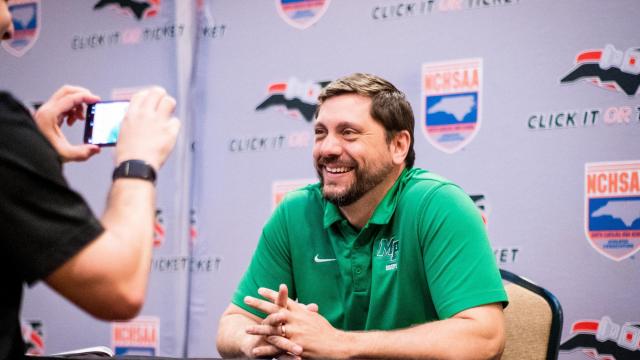
Spring sports are in the air, and so is the change coming to high school sports. In the next few years, we will see some of the changes coming to high school sports as they are significantly changed in the years to come. In the fall, our school will have a new conference rival, the introduction of Name, Image, and Likeness deals (NIL), and shift the responsibility of the NCHSAA as it currently stands. In the future, we will see an expanded classification system with conference realignment in 2025-2026.

One of the most impactful changes will be the addition of a new conference opponent to our sports teams’ schedules as Ballantyne Ridge High School opens its doors in the fall. The athletic teams will be known as the Ballantyne Ridge Wolves, wearing orange, gray, and Carolina blue. Ballantyne joined the conference two years after Palisades, another relief high school, opened its doors. The Wolves will be the 7th team in the conference and intend to offer all sponsored CMS sports with both JV and Varsity teams. The school’s athletics will be led by newly hired athletic director Jeff Smith and will be hiring coaches in the coming months.  

Another change is the adoption of the NIL policy for private school athletes. The main governing body of independent high schools, the NCISAA, approved NIL deals for private schools athletes in February. Under the rules established, schools can not use NIL to recruit students, and students are prohibited from doing deals that promote certain activities such as alcohol, gambling, and cannabis. The approved proposal was similar to that of the public school body, the NCHSAA, who attempted to introduce NIL to public schools last year but was shut down by legislators. The recent move by the NCISAA has raised fears that private schools will be able to lure public school students looking to receive NIL money, creating an increasing gap between public and private schools.

NIL was not the only thing impacted by the legislature, as politicians in Raleigh passed a bill that dramatically reshaped the authority of the NCHSAA. The bill handicaps the ability of the Association to raise money and provide scholarships and would give much authority to the Superintendent of Public Instruction, Catherine Truitt. The Association would have to work more closely with the Superintendent’s Office moving forward, with the full impacts not being for a couple of years. The most impactful implication is a potentially degraded championship experience, caused by the loss of corporate sponsorships. This could lead to games being moved from large venues to small school facilities which would create ticket crunches similar to last year’s regional game between Myers Park and North Mecklenburg.

While those impacts are still speculative, one of the most important changes is the expansion of the school classification system in North Carolina, moving from 1A-4A all the way to 8A, creating 4 additional classifications. The new classification would coincide with conference realignment in the 2025-2026 school year, and would provide room for growth for the NCHSAA as more schools are added. Hopefully this change will create a more even playing field between schools because schools would be placed according to average daily membership numbers, which correlates to school size. Some do fear that the new classification would disadvantage schools by taking away school performance as a factor in aligning the school, as was previously the case in the 1A-4A system.

Ultimately, high school sports will face many changes and challenges in the years to come. Regardless of these changes, one thing that will never change is how high school sports are such a significant part of the high school experience.  Our lives are forever touched by the experience of high school sports, whether we are athletes or spectators cheering on our teams.

Filed Under: Local/National, Sports

Primary Sidebar

Categories

  • Arts & Entertainment
  • Campus News
  • Columns
  • Editor's Notes
  • Editorials
  • Education
  • Features
  • Local/National
  • Podcasts
  • Pro and Con
  • Seasonal
  • Sports
  • World News

Newspaper 2023-2024

Newspaper Application

Archives

Copyright © 2026 Myers Park Hoofprint