

• Skip to primary navigation
  • Skip to main content
  • Skip to primary sidebar
  • Staff
  • About Us
  • Contact Us

Myers Park Hoofprint

The Myers Park High School Newspaper

  • Arts & Entertainment
  • Campus News
  • Editorials
  • Features
  • Local/National
  • Sports
  • World News
  • Editor’s Notes
  • Podcasts

World News

From the Ashes

February 12, 2025 By Maryanne O'Neill

On April 15, 2019, Paris’ most famous cathedral caught fire. The cathedral burned for fifteen hours, resulting in massive amounts of damage that would take years to repair. The cause of the Notre Dame fire is still unknown, although it is believed to have been some sort of electrical mishap. The flames destroyed one of the three spires, the majority of the roof, and the cathedral’s upper walls, as well as damaging historic relics and statues. 

Parisians watched the fire in tears, mourning as one of their greatest historic landmarks was engulfed in smoke. The Notre Dame has been an icon of Paris since its construction, beginning in 1163 under Bishop Maurice de Sully and coming to completion in 1260. The cathedral sits on Île de la Cité, an island in the Seine River, located in the first arrondissement of Paris. For centuries, it has been a place of worship and a testament to the Catholic Church’s contributions to art and architecture. 

The spire of the cathedral was a staple of the Paris skyline as well as French Gothic architecture. During the fire, it collapsed, sending burning rubble crashing to the floor. The roof was a unique aspect of the Notre Dame, constructed of wood from oak trees over hundreds of years old from the forests of Bercé in central France. The roof of the cathedral was known as la forêt, which means “the forest” in French. 

However, for the next five years following the fire, architects and historians worked to restore the cathedral of Paris to the best of their abilities. The process began only ten days after the fire was tamed, as investigators entered the remains of the Notre Dame to assess the damage and potential cause. From April 2019 to August 2021, the reconstruction project was held in a “safety phase” to clean the wreckage and ensure that the restoration would happen safely, so as to not cause further damage to the remains of the original building. 

The process of reconstructing the cathedral began slowly and took time, but each step in the rehabilitation was a celebratory accomplishment. In September of 2022, the stained glass windows were fully restored, after facing serious damage from the smoke and dust emitted from the fire. The 170 year old windows were miraculously strong enough to withstand the high temperatures and are now back on full display. 

Then, on December 16, 2023, a new spire was constructed – adorned with a new golden rooster and cross. The golden rooster represents the long standing national emblem of France, and was blessed by Archbishop Laurent Ulrich before being placed atop the spire. At last, one of the most significant symbols of Paris had been restored. 

Nearly three months later, the roof was completed and, this past September, the bells were reinstalled. Their return required a convoy of trucks, carrying the bells that weighed at over 3,500 kilograms and represented one the final steps of the reconstruction process. 

As the finishing touches were completed, French President Emmanuel Macron made his final visit to the reconstruction site for one last look before the grand opening. Finally, on December 7th, 2024, the Notre Dame’s doors were reopened to the public.

For the first time in five years, the thunderous organ sounded, welcoming people back into the sacred place of worship. An opening service, inaugural mass, and a televised ceremony paid homage to and celebrated the unveiling of the good-as-new Notre Dame. The cathedral, despite minor changes, holds the same historical and religious significance as it has for centuries. The art, sculptures, and limestone walls are each a testament to what the cathedral has withstood in its time.

Filed Under: World News

America’s Next Frontier

February 12, 2025 By Dimitri Katsanos

America has never shied away from its desire to expand its territory as our nation has continued to evolve. The country has constantly moved in pursuit of new lands throughout history, with the principle of Manifest Destiny and the purchase of Alaska as some of the many examples of American expansionism in the past 250 years. The most recent chapter of this phenomenon appears to have just begun with the election of President Donald Trump, who has stated his desire for a slew of different places to become part of the United States. Some of his goals have been more serious than others, with the pursuit of Greenland being seen as the most realistic. The President has also suggested that Canada become the 51st State and that the US should regain control of the Panama Canal, empowering his base while frightening American allies. Regardless of the final outcome, American expansionism has returned for the next 4 years.

The new movement started shortly after President Trump was elected, with a meeting with former Canadian Prime Minister Justin Trudeau as one of the first serious indications of the President’s desire for the Canadian neighbor to become a part of the Red, White, and Blue. Over dinner at the President’s Mar A Lago Resort, Trump suggested to Trudeau that if Canada could not deal with his proposed tariffs, the nation should just become the 51st State. The comments spread like wildfire, with both sides presenting them as more of a fantasy than a real possibility. The comments did help demonstrate the new foreign policy approach of the Trump Administration, which has threatened and imposed tariffs on US allies like Canada and Colombia in order to exert pressure on countries to come in line with US policies.

Tariff pressure has not been the only thing that Trump has threatened. The President has increasingly used rhetoric in order to extract his political goals as well. He has engaged in a public feud with the government of Panama, demanding that the US regain control of the Canal because of perceived Chinese interference in its operation. Furthermore, the President has used executive action in order to exert his will, signing an executive order to rename the Gulf of Mexico to the Gulf of America, adding another layer to his war of words and political posturing.

Trump’s biggest focus has been on acquiring the country of Greenland, sending a group of family members and political allies to the nation in order to explore the possibility of a sale or other maneuver to acquire the country. He has also lobbied the Danish government with demands to acquire Greenland, which is part of Denmark. The Danish government has resisted most of the attempts of the President and has become increasingly wary of the President’s efforts. Notably, Greenland’s government has moved towards independence under the leadership of Prime Minister Mute Egede, and Denmark has affirmed the nation’s right to do so. Even if it were to gain independence, Greenland would more likely wish to remain independent rather than move to being a part of another nation. Greenland becoming part of the US will likely remain an interesting discussion in global affairs for the foreseeable future.

Supporters of the President champion these maneuvers as part of the “America First” nationalist policies of the administration, which all work to project American influence and strengthen the country through strategic deals and initiatives. Opponents argue that the public feuds help create rifts between the US and other countries, weakening the US position on the global stage as well as with critical allies. Ultimately, these moves show the nation’s future as it explores a continued expansion of the nation that started as 13 colonies nearly 250 years ago.

Filed Under: World News

The Biggest Car Company You’ve Never Heard Of

May 29, 2024 By Will O'Neal

In the US, American auto reigns supreme. Ford, Chevy, and Chrysler are the heavyweights that have seemed for many years to be immortal. In other places around the world, however, a new story is beginning to play out. The international sales of American vehicles are starting to decline, and another world superpower is ready to replace the U.S. A previously dormant international player in the auto industry, China, is starting to take over the automotive world.

China is posing an ever-growing threat to the American auto industry. The U.S. has fallen from 4th to 6th in vehicle exports, behind both Mexico and South Korea;while the U.S. has slowed down vehicle exports, China has started to rise as an international contender. The transition from traditional gas-powered internal combustion engine (ICE) cars to electric vehicles (EV), has started to favor Chinese automakers. Apart from export volume, Chinese manufacturers have pushed the limit for both vehicle production and pricing, something other global automakers like GM and Ford Motor have struggled to do. 

In 2019, faced with a company struggling to stay afloat, Elon Musk and Tesla turned to China, a country with more lenient laws that made factories easier to build and maintain. This helped Tesla stay afloat, but they weren’t the only startup to take advantage. Chinese-based BYD has quickly risen to success, riding off the back of the electric vehicle wave. Last year, BYD surpassed Tesla in worldwide EV sales, and BYD and other Chinese companies like NIO and XPeng have made rapid advances in battery technology, improving charging speed and energy density. China has spent billions of dollars on research, development and EV infrastructure, promising plans to build 1.2 million public charging stations by 2025. 

BYD isn’t just building cars. The company also manufactures lithium batteries, solar modules, electric-powered buses, trucks, and trains, as well as AI and transportation software. According to SNE Research, BYD has more than 10% of the global energy storage system market, and in January signed a contract to supply one of the largest energy storage projects in Chile. The company has also privately told investors that it is controlling as much as 30% of the US utility-scale solar market. 

Although BYD may be starting to pick up steam internationally, there are still barriers to the company ever becoming successful in the US. Chinese automakers have traditionally struggled to gain traction in the US, and only five cars sold in the US are built in China (The Lincoln Nautilus, Buick Envision, Volvo S90, Polestar 1, and Polestar 2). One of the largest obstacles to a Chinese company becoming successful in the US is protectionist laws and tariffs. Former president Donald Trump has predicted a “bloodbath” for the US auto industry if he loses the election this November and promised tariffs against Chinese automakers, stating “We’re going to put a 100% tariff on every single car that comes across the line, and you’re not to going to be able to sell those cars if I get elected.” The Inflation Reduction Act of 2022 placed battery sourcing and manufacturing requirements in place to encourage domestic EV production, and according to Karl Bruer, executive analyst at iSeeCars.com, “The United Auto Workers and the U.S. auto industry have enough political power that no matter who is in the oval office, there will be an effort to protect it.” 

The most likely path that BYD or other Chinese companies could take to selling cars in the US would be similar to the way Japanese automakers like Toyota and Hyundai entered the US, selling their most affordable models before moving up to higher-end models. This process, however, took Japanese manufacturers around 50 years before reaching mainstream relevance. As of now, it seems unlikely that BYD will take a stab at the American market anytime soon, but the threat to the American auto industry remains. 

Filed Under: World News

What’s up in The World?

March 28, 2024 By Ja'Niyah Forney

From wars to recalls, the first three months of 2024 have been filled with head-turning stories, each more interesting than the next. Podcast after podcast, news story after news story, there is a question we all have to ask ourselves: What’s up with the world? As of March 2024, the world is going through a complex chain of events, challenges, and opportunities that shape the society we know today. At the surface of the world, there are ongoing conflicts, political tensions and transitions, and the pursuit of peace amongst all the uncertainty. 

Wars and conflicts continue to impact lands all around the world, leaving devastation  and ending the lives of countless citizens. From the inhumane crisis in Sudan, the persistent conflict in Yemen, the ongoing war between Russia and Ukraine, to the devastating war in Gaza. The human toll of the ongoing wars remains a very serious concern. Efforts to negotiate ceasefires, provide aid, and give political solutions are underway, but the road to lasting peace is full of complications and complexities. 

In addition to ongoing wars, the world is witnessing political changes and elections that shape the future of our world. Elections in various countries have been marked by debates about governance, economic policies, and social values, representing the different array of voices and perspectives within most democratic societies. The outcomes of these elections give a more clear direction of domestic and foreign policies, and the global balance of power amongst countries. 

Amidst these geopolitical dynamics, global health remains a crucial focus, with the persistent impact of the COVID-19 pandemic shaping public health policies and societal norms. Social and environmental issues also play a role in shaping our current state of the world. Women’s rights also joins the conversation when abortion rights are being discussed on a federal level. When lawmakers are split between their decision on abortion rights in the United States. With new medication and birth control being presented to the public, the legality of this topic is being discussed more.  Conversations about climate change, environmental sustainability, and the need for immediate action to address the environmental challenges. These conversations call  for sustainable practices, renewable energy changes , and conservation efforts to show  the urgency of protecting  the planet for future generations. 

As the digital world continues to expand and advance in the world around us.  Advancements in artificial intelligence or AI are reshaping our world  and redefining the boundaries of what is possible. These technological advancment’s ethical and regulatory involvement remain very questionable subjects of an ongoing debate. On the cultural side, art, literature, and creative expressions continue to serve as an ethical and moral source of inspiration and reflection among  the world’s imperfections and complexities . Artists, writers, and performers are finding new ways to engage with their audiences, bringing up thought provoking conversations, and exploring the world across different cultural perspectives. The nature of our world shows the need for collaboration, dialogue, and mutual understanding in addressing the challenges beyond borders. 

Ultimately, the world is a complicated, imperfect place, the power of human actions, empathy, and cooperation remains a guiding force in shaping a world that reflects our collective vision for a more equitable, sustainable, and harmonious global community. Amid global tensions, ongoing conflicts, and political changes, the spirit of hope and resilience stays strong as a testament to humanity’s long lasting potential and capacity to create a world that values peace, justice, and shared hope. So that should answer your question and summarize the plethora of things to say about what’s up with the world.

Filed Under: World News

Blue Zones

March 28, 2024 By Elle Robinson

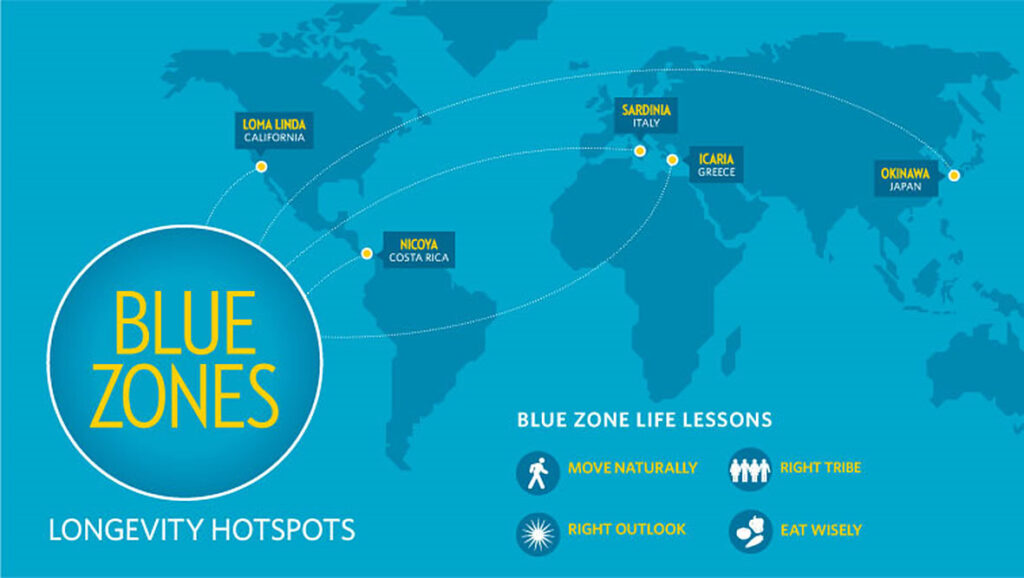
Photo contributed by Change4Health

The Evil Queen from Snow White and Mother Gothel from Tangled both share something in common, aside from being evil. It’s their motivation for their deeds: to stop the progression of time on their appearance. The need to stop time, specifically on our appearance is something we have struggled with since the beginning, of well, time. We beg the youth to wear sunscreen, use peptide creams, dye our grays, use Botox, and have even gone looking for the fountain of youth. One thing for certain, time is inevitable, and no one can outrun it. We have been able to push back the life expectancy of humans thanks to advancements in technology and medicine, but it will catch up to us at one point. Many think that to live a long life exercise, a good diet, or lots of sleep. However, what is the true secret to living a long life? Scientists have been searching for the answer and conducted a study on areas where the proportion of people who reach 100 is significantly higher than the world average (72 years). These areas are known as “Blue Zones’ ‘ and there are exactly 5 in the world: Sardinia, Italy; Okinawa, Japan; Nicoya, Costa Rica; Icaria, Greece and Loma Linda, California. So, here’s the secret to a long life. 

  1. Move Naturally 

Instead of working out every day at the gym and purposefully moving their bodies, residents of Blue Zones find themselves moving their bodies naturally. ⅗ of the Blue Zones are located in very narrow, steep regions that didn’t always have access to industrial roads, which “protected these zones from the corrosive effects of globalization,” says Dan Buettner, a Blue Zone Researcher. These areas are typically more compact and not a lot of people own cars, so they rely on public transportation. This will inadvertently make the residents walk more daily than other people in more widespread cities. Walking is one of the best exercises there is, according to Buettner, he adds that having a dog can give the extra nudge to move your body daily. 

  1. Drinking liquids

Consuming water and staying hydrated is important to maintaining healthy body movements, but residents of blue zones also contribute their longevity to other liquids such as tea and red wine. Moderate drinkers of alcohol have been proven to outlive non-drinkers, moderate meaning 1-2 glasses of red wine a day. This is because red wine is full of antioxidants that clean the arteries. Buettner also adds that residents drink a significant amount of tea, stating that, “In Okinawa, it’s often green tea, while in Ikaria it’s usually a tea made with oregano, rosemary or mint.”

  1. Low Beef & Dairy

In a majority of these areas, residents consume little red meat and specifically in Loma Linda, are vegetarian. It’s important to note that they don’t cut out all dairy, having on average 3 eggs per week and drinking oat and goat milk predominantly. In a study by the NIH, red meat leads to “…increased risks of diabetes, cardiovascular disease and certain cancers. The studies have also pointed to an elevated risk of mortality from red meat intake.”

  1. Purpose

This is probably the most unappreciated reason for living longer, but the most important. They find purpose in religion and social circles. Studies have found that attending faith-based services four times per month will add 4-14 years of life expectancy. Having true life-long friends can lead to having no loneliness, and reduced amounts of stress, plus they can lead to more healthy behavior.

We find ourselves consumed in our day-to-day responsibilities, but the true secret to living longer is not caring. Residents of these areas go about their lives naturally, not actively trying to avoid any of these things. They feel fulfilled in their life, which inadvertently causes them to have more healthy habits that we have not adopted. Let’s live longer by living happier!

Filed Under: World News

Conflict in Ukraine and Teens

May 8, 2023 By Eleanor Ohmstede

On February 24, 2022, Russian troops invaded parts of eastern Ukraine. Over a year later, there have been around 8,000 civilian deaths and nearly 14,000 injuries. Of these fatalities, 500 were children. When the conflict started, nearly 20% of Ukraine’s population fled. Over 5 million children are currently displaced, either outside their home country or in Ukraine, in danger because of the continuing war.

Far from a typical high school experience, teens in Ukraine will have endured extreme and dangerous situations that may leave them with post traumatic stress disorder (PTSD) and depression. This war has had detrimental effects on education, mental health, and leaves many without a stable and consistent home.  

Many families have opted for virtual or hybrid methods of education. However, the conflict has left the infrastructure in Ukraine severely damaged. The damage to electricity and energy has made accessing the internet and online school difficult for most families. 

At the beginning of the war, many thought the conflict would be over quickly. However, with the continuing conflict, providing an education for these children has become increasingly critical. Of the children who evacuated Ukraine, 2 out of 3 are yet to be enrolled in school within their host countries. The overriding issue is providing early education which is vital to develop necessary social skills for early childhood. 

Many mental health issues arise without the structured and safe environment that schools provide for children. The conflict has taken away stability, safety, school, friends, family, and a home from Ukrainian children. Mental health issues arising now could persist well into adulthood. War can cause or worsen anxiety and lower the condition of living. Supporting children and teens and providing resources to build resilience and nurturing care is crucial to healing the mental wounds that war causes.

Because of the mass evacuation of Ukraine, many children and teens do not have a controlled home environment. Refugees have found protection in many European countries and are attempting to find jobs and create a new life. For teens, this dynamic lifestyle is not beneficial for development. 

Children and teens require structure to mature. A structured life is essential to improve decision-making and allow for the development of influential adults. Growing up without a home and moving around can lead to mental health problems and reduced decision-making skills. 

Some of the top issues following the war are being addressed now by UNICEF, or the United Nations Children’s Fund. UNICEF is an agency of the United Nations responsible for providing humanitarian and developmental aid to children worldwide. The first and most prevalent issue they are addressing consists of social protection or helping families or individuals cope with crisis, shock, find jobs, and improve productivity. The next topic of discussion is child protection. UNICEF aims to protect children from exploitation, abuse, neglect, harmful practices, and violence. Another category is education. As mentioned earlier, education is crucial to development, and restricted access to education has been a serious issue arising from the war. In response, UNICEF is funding access to social and emotional learning for children of all ages. Another tier is water, sanitation, and hygiene. Many refugees may struggle to access these necessities. Millions of people are receiving access to fresh water and personal hygiene products. The last focus is health. UNICEF is funding vaccinations and providing primary care for refugees across Europe.

For children and teens living in Ukraine or refugees living in Europe, their lives have changed drastically in the past two years. Issues such as access to education, problems with mental health, and a struggle to grow up in a changing and potentially dangerous environment are arising. Funds are attempting to relieve these problems. However, it’s fundamental to understand what Ukrainians have gone through because of this war and how it has affected teens.

Filed Under: World News

Idaho Murders

March 15, 2023 By Katie Zarzour

Four students at the University of Idaho were brutally stabbed to death in their sleep on November 13th, 2022. The victims, Ethan Chapin, Madison Mogen, Xana Kernodle, and Kaylee Goncalves, three of whom lived in the house where the murders took place, were all victims of what the police initially called a “targeted attack” by primary suspect Bryan Kohberger. Kohberger was arrested in late December after weeks of investigation and at least 19,000 tips from the community following the case’s explosion on social media. Kohberger is a 28-year-old Ph.D. student of criminology at Washington State University, just 8 miles from the murder scene (New York Times). Here is everything that is known about this unique case so far, beginning with a timeline. 

On the night of the murder, two pairs of roommates went out separately and arrived home around 2am (New York Times). Kernodle and Chapin arrived home first, followed by Goncalves and Mogen, according to the affidavit. The two other roommates, who were not murdered, were also in the home at the time of the stabbings. Footage in the neighborhood shows a white Hyundai Elantra driving around the murder scene three times just before 3:30am. Kernodle received a DoorDash delivery at 4am, the same time one of the surviving roommates claimed to have been woken up by what sounded like her dog upstairs. At roughly 4:04am, the Elantra made its 4th round around the house (Time Magazine). Phone records show that Kernodle was on Tik Tok until 4:12am. Sometime after 4am, crying could be heard from Kernodle’s room along with a male voice saying something along the lines of “It’s ok, I’m going to help you,” her surviving roommate told police. Court documents also report that a security camera from a nearby home captured audio of a whimper, thumping, and a dog barking. At around 4:20am, the Elantra is seen speeding away from the home. Police did not arrive on the scene until noon later that day when they received a suspicious persons call and found the four dead of stab wounds in separate rooms of the house (Time Magazine). 

Moving to the arrest of suspect Bryan Kohberger, police say that following the murder Kohberger left town for a Pennsylvania family home. A Pennsylvania SWAT team broke down the door of the house on December 30th, formally arresting and charging him with four counts of first-degree murder, and one count of burglary. However, it was a long road to get to his arrest. Police were able to narrow down on Kohberger once they broadened the search for the white Elantra, finding one at Washington State University registered to Kohberger that matched the description from the videos. Authorities also said that a surviving roommate claimed that Kohberger matched the description of who they had seen in the home on November 13th. Phone records also placed Kohberger at the scene at 4:48am, according to the affidavit. Agents say that before Kohberger’s arrest, he was seen wearing surgical gloves outside multiple times and deeply cleaning his car. Authorities obtained DNA from Kohberger’s trash bins at his home in Pennsylvania and were able later to match the sample with that on the knife sheath from the murders. Kohberger claims to be surprised by the arrest and is still pleading not guilty. According to the New York Times, Kohberger “looks forward to being exonerated.” 

What many investigators find most interesting about the case is Kohberger’s current occupation as a teaching assistant at Washington State University, obtaining a Ph.D. in criminology. The question asked by many on social media has become: was Kohberger studying criminology to learn how to commit a crime? Students of Kohberger have shared on social media, specifically Tik Tok, the unique assignments they have been given and Kohberger’s thrilling interest in violent crimes. As this case actively continues to unfold, more information comes to light and poses interest for people all across the country as the Idaho murders continue to headline national news.

Filed Under: Local/National, World News

Frosty- But Not the Snowman

March 14, 2023 By Eleanor Ohmstede

Nationwide temperatures dropped as much as 20 degrees in just a few hours between December 22nd and 24th of 2022. While it was not the coldest North Carolina Christmas on record, it was memorable. The coldest Christmas on record was in 1983, when the average temperature across the U.S. was 20 degrees. An arctic blast caused these intense and quick drops in temperature: cold arctic air from the jet stream slipped down to middle latitudes, resulting in extreme temperatures. 

Last year’s arctic blast affected everywhere east of the Rockies, spreading cold weather throughout the east coast and as far south as Florida. In North Carolina, the low temperatures and wind chills hit well below freezing. It got as cold as -25 degrees on Christmas Eve in Western North Carolina. The governor even called a state of emergency in several counties because of the cold and icy conditions. Earlier in the week, some places experienced winds up to 60 miles per hour.

Fluctuating hot and cold weather can be traced back to wind patterns surrounding the North Pole. The polar jet stream is a system of air that rotates around the polar vortex over the Arctic Region. When the polar vortex is unstable, cold bodies of air can move down from the jet stream and affect North America, Asia, and Europe. While this year’s front hit North America surprisingly early, we usually don’t see it until late January to early February.

The difference in temperature between middle latitudes and the polar vortex controls the jet stream. However, the arctic is heating much faster than these lower latitudes, causing the jet stream to be much more unstable. Instead of moving in a relatively direct route around the globe, the lowered difference in temperature allows the jet stream to vary much more, bringing cold air to warmer climates. While the polar jet stream does not always affect lower latitudes, it can be the root of extreme weather.

Over the past 30 years, the polar vortex has been steadily declining, resulting in more extreme weather. This past Christmas, the United States saw some of this severe winter weather. Along with subzero temperatures and icy conditions, December 2022 came with a host of other issues.

The arctic blast led to flight cancellations, interrupting holiday travel for many families during some of the year’s busiest travel days. The winter storm hindered around ⅔ of the flights nationwide on the days leading up until Christmas. Those forced to stay home because of the weather found themselves with another disruption: they were without power.

The cold temperatures stressed the electrical grid, causing more than 1.6 million people to be without electricity on Christmas Eve. Duke Energy utilized rolling blackouts for the first time in its history to relieve some of the stress on the power grid. There was supposed to be an automated system that would cut power in some areas for 15-30 minutes. Unfortunately, the automated system failed, and the rolling blackouts had to be controlled manually by Duke Energy workers, resulting in a much larger margin of error. 

Hundreds of thousands of customers were impacted by the blackouts, and there was little to no warning before the company cut power. Some customers were without electricity and heat for up to 12 hours on Christmas Eve. When the power did come back on, Duke Energy advised customers to reduce energy use by turning lights off, avoiding using the washer, dryer, or dishwasher, and lowering thermostats.

Thankfully, most North Carolinians had electricity restored by Christmas morning, and most flights nationwide resumed. Despite the dramatic onset of the arctic blast, most families could enjoy the holidays in the warmth of their homes, and the winter weather resolved as quickly as it started.

Filed Under: World News

Break the Cycle

March 14, 2023 By Vrinda Mahajan

The phrase “period poverty” encapsulates the lack of access to feminine period products and the issues that are associated with it. Many issues arise in terms of the accessibility of menstrual supplies. Firstly, they can be a financial burden, as period products can be expensive. Secondly, some developing countries may not even sell disposable supplies such as pads and tampons, leaving women to develop homemade supplies. These homemade supplies can be made from paper, cotton, cloth rags, or leaves, which threatens the menstruator’s health and can cause infections. Grace Clarke, an assistant researcher at Children’s Hospital of Philadelphia, attended school in Monrovia, Liberia, and stated of her experience, “I personally had instances when the only means to manage my menstrual cycle was to use old clothes or tissue because my family couldn’t afford to purchase menstrual products.”

However, in developing countries, the issues don’t stop there. Menstrual cycles can prevent people from attending school for numerous reasons. For one, homemade supplies require frequent changing. Secondly, many schools lack bathrooms with working water/toilets and adequate privacy, making managing menstruation difficult for female students. As a result, attending school becomes a challenge. The United Nations Educational, Scientific, and Cultural Organization reported in 2014 that one out of every ten menstruating youth does not attend school during their cycle as a result of inadequate access to period products. 

The problem is dire in the United States, too. In 2021, researchers at the University of Pennsylvania and George Mason University conducted a nationwide survey and found that 10% of college students are unable to afford menstrual supplies, resulting in increased skipped classes and amounts of self-reported depression. According to the Journal of Global Health Reports, 16.9 million people who menstruate in the US live in poverty, and two-thirds of the 16.9 million low-income women in the US couldn’t afford menstrual products over the past year. Further, half of this demographic had to choose between menstrual products and food. The tax on period products also rose from a relatively lower 4.7% to a staggering 10% in 2019, increasing the financial burden of menstrual products. Since period poverty affects mainly low income communities/developing countries, a disproportionate amount of those affected by period poverty are racial minorities. Therefore, period poverty can also be a racial issue. 

During the peak of the COVID pandemic when public facilities were shut down, many people lost their only access to period products, which were through educational facilities and community centers. In addition, losses of income due to job loss during the pandemic may have made purchasing menstrual products increasingly difficult for individuals. 

Equal rights for women are a relatively new concept in application, and arguably have not been accomplished fully in any region of the world. In developed countries, women may face issues such as the wage gap and employment discrimination, however in developing countries, women may be forced into labor or housework rather than receiving an education. While the world is working to overcome these disparities, period poverty continues to be a setback for women’s rights. Women have been fighting for centuries to have access to education and the ability to join the workforce, and for these rights to continue to be unequally forsaken due to menstruation is inherently sexist. 

By remaining silent about these struggles, society remains complicit to a male-dominated culture. This phenomenon is widely unacknowledged, likely because there is still a lot of hesitancy around discussing menstruation. What individuals can do to continue to work toward a more just world is raise awareness about period poverty, and take action when possible, such as donating to period product drives at a local community center or school. Any efforts can lessen the impacts of period poverty!

Filed Under: World News

The Dying Rainforests

March 14, 2023 By Madison Winn

On December 21, 2022, a documentary called Wildcat was released This documentary discusses the rehabilitation and reintegration of two ocelots, medium sized spotted wild cats, into the Amazon rainforests of Peru. The documentary depicts many events: the healing of a tortured war hero, and the experiences and developments of Samantha Zwicker, one of the founders of the conservation organization, Hoja Nueva. Hoja Nueva helps carnivorous animals be reintroduced to the Amazonian wild. However, the documentary more importantly shows the effects of humanity on these forests. 

In Wildcat, the first ocelot, Khan, who was going to be reintroduced was killed by an illegal hunting technique in a protected area. Then, with the second ocelot, Keanu, volunteer Harry Turner encountered several problems not only with deforestation in privately owned areas, but also the effects of that deforestation on the ocelot’s and other Amazonian species habitats, endangering Keanu’s life. This then introduces many of the major problems that rainforests face today: deforestation, illegal hunting, and more. The effects of these actions are detrimental to the most complex and biodiverse habitats on Earth. 

The rainforests of the Earth are extremely important both environmentally and to humanity. Rainforests are home to 40,000 plant species, almost 1,300 bird species, 3,000 types of fish, 427 species of mammals, and 2.5 million types of insects. Rainforests also increase the stabilization of the world’s climate, taking in carbon dioxide and maintaining the water cycle. There are three major rainforests in the world: the Amazon rainforest, the rainforests of the Congo, and the rainforests of Indonesia. Illegal logging and hunting have diminished these habitats drastically. The Amazon rainforest has been known as the ‘lungs of the world’, but according to a 2023 New York Times article, different results were shown. Caused by illegal burning and logging, the Amazon rainforest is now releasing more carbon dioxide from fires and decomposition of dead vegetation and animals that it is reducing. Indonesia also faces significant deforestation, with over 80% of its rainforests already cut down to provide spaces for palm oil trees. Along with extreme loss of vegetation, the effects of deforestation, and the destabilizing effects of those on both the atmosphere and water cycle, in the past 35 years, this habitat destruction has also led to the extinction of around 50,000 species in these areas.  If the rainforests are destroyed, biodiversity and food sources will be diminished, there will be degradation of soil, pollution of water sources and lands, frequent flooding in those areas, warmer temperatures, and long droughts.

What can be done to minimize these effects? In the Amazon rainforest, about 80% of the deforested areas have been covered by pastures, the majority of which for cattle. Cows take much more space and resources than most other animals, and also produce methane through their bodily functions, and greenhouse gas detrimental to the environment. Therefore, cutting down the amount of beef eaten by oneself and their family can minimize the demand for beef and livestock areas. Though much more difficult, cutting down on the amount of palm oil bought in products can also minimize the demand for palm tree plantations that have overtaken the Indonesian rainforests. Finally, donating or giving aid to many of the foundations and volunteer programs that help with the rehabilitation of rainforest wildlife protection is always positive. Of those, Hoja Nueva, as seen in Wildcat, makes its mission “the protection and fortification of Amazonian biodiversity in Madre de Dios, Peru through conserving intact ecosystems, confronting threats to wildlife, implementing biological research, and conducting environmental education.” Though the future looks dim concerning the health of rainforests, individuals can still save these areas and protect the Earth’s ecosystems. 

Filed Under: World News

  • Page 1
  • Page 2
  • Go to Next Page »

Primary Sidebar

Categories

  • Arts & Entertainment
  • Campus News
  • Columns
  • Editor's Notes
  • Editorials
  • Education
  • Features
  • Local/National
  • Podcasts
  • Pro and Con
  • Seasonal
  • Sports
  • World News

Newspaper 2023-2024

Newspaper Application

Archives

Copyright © 2026 Myers Park Hoofprint